
Explosion Suppresant
Explosion Suppressant Foam /Anti-Slosh Foams /Gas Tank Foams/Reticulated Foam
Reticulated Polyurethane
These types of explosion suppressant foams and gas tank anti slosh foams (MIL-DTL-83054C and MIL-PRF-87260B) are designed specifically to be used in an environment where gasoline/diesel/aviation fuel is the primary fluid being displaced. Overall lifespans may vary depending on fuel type, foam type and application.
Please contact us for more information
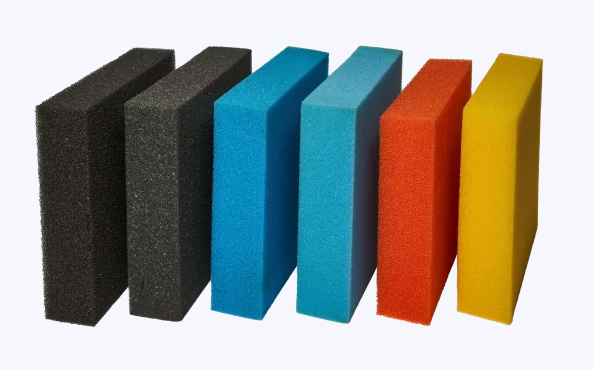
Explosion Suppressant Foam
MIL-PRF-87260B Grade 1, 15 pores per inch
Polyether Reticulated Polyurethane Foam – Conductive Baffle and Inerting foam material, Explosion Suppressant Foam, Gas Tank Anti Slosh Foam
Reduces hazards caused by electrostatic charge generation related to aircraft, fuel handling, and electrical storms.
MIL-PRF-87260B Grade 2, 30 pores per inch
Polyether Reticulated Polyurethane Foam – Conductive Baffle and Inerting foam material, Explosion Suppressant Foam, Gas Tank Anti Slosh Foam
Reduces hazards caused by electrostatic charge generation related to aircraft, fuel handling, and electrical storms.
MIL-DTL-83054C Type 2 Yellow
Polyester Reticulated Polyurethane Foam Baffle and Inerting foam material, Explosion Suppressant Foam, Gas Tank Anti Slosh Foam
Non Conductive
MIL-DTL-83054C Type 4 Dark Blue
Polyether Reticulated Polyurethane Foam Baffle and Inerting foam material, Explosion Suppressant Foam, Gas Tank Anti Slosh Foam
Non Conductive
MIL-DTL-83054C Type 5 Light Blue
Polyether Reticulated Polyurethane Foam Baffle and Inerting foam material, Explosion Suppressant Foam, Gas Tank Anti Slosh Foam
Non Conductive
Benifits/Uses
Explosion Suppression
Anti-Slosh & Slosh Mitigation
Additional Benefits
- Nothing to turn on
- No monitoring
- No moving parts
- No functional components to fail, maintain or monitor other than periodic inspection
- No failure modes if properly installed and maintained
- Self-healing characteristics
- Compatible with most standard fuels
- Reduced structural damage when hit by a projectile, due to its energy absorbing characteristics
- Reduction in vibration
- Reduction in noise
- Natural filter inside the tank
- System is always available to protect aircraft/vehicle/vessel regardless if it is in use or not.
- Foreign Object Debris Barrier
Additional Benefits
Military
- Aircraft
- Armoured vehicles
- Marine/Hovercraft/Landing Craft
- Unmanned Aerial Vehicles and Platforms
- Wheeled Vehicles
Commercial/Non-Military
- Automobile Racing
- Motorcycle and Powersports
- Boat Racing
- Commercial Aviation
- Civil Aircraft
- Gas Cans and Storage Containers