Gas tank Comparison (With and Without Foam)
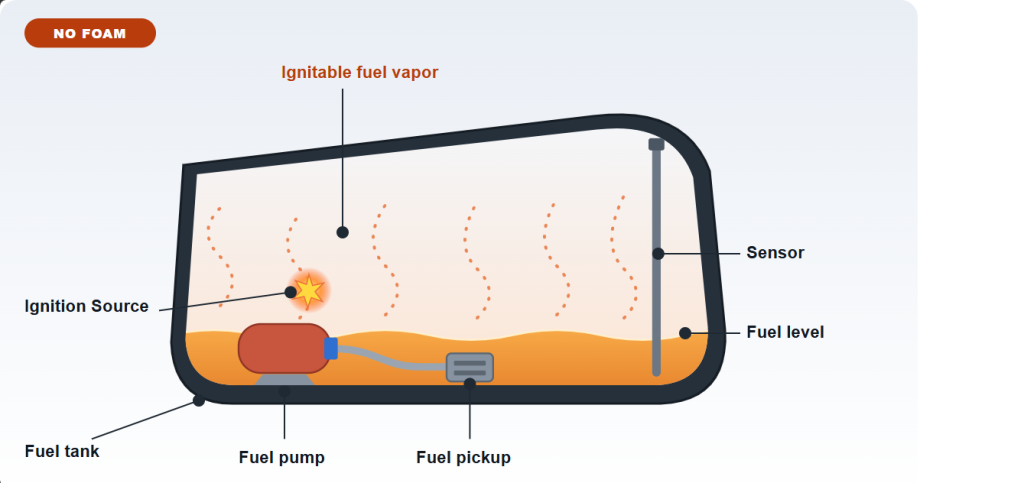
Gas Tank Without Foam
As fuel is used, the empty space in the tank fills with ignitable fuel vapors. If an ignition source enters the tank, such as a projectile strike, lightning, or an internal spark, those vapors can ignite, and without foam, nothing stops the reaction before it becomes an explosion.
Gas Tank With Foam
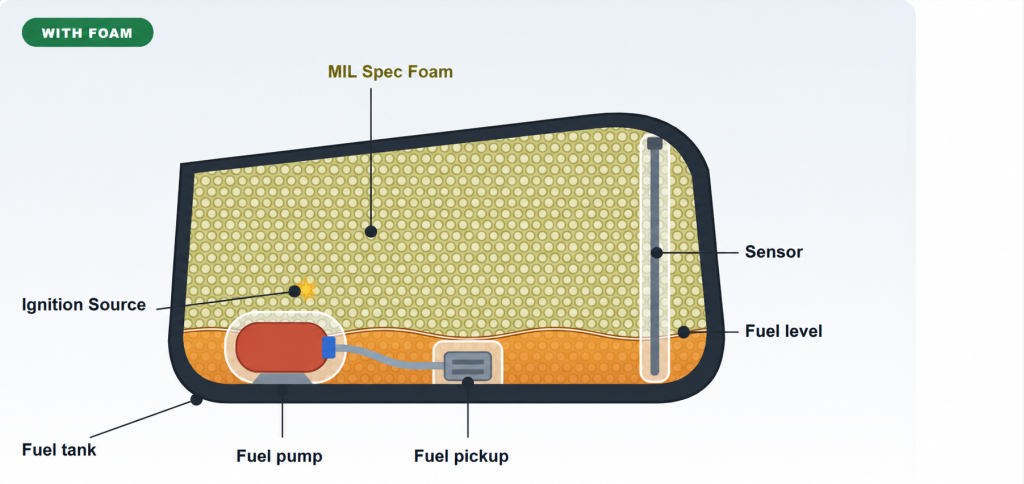
The foam replaces the volume where fuel once was, filling the space that would otherwise hold ignitable vapors. If an ignition event occurs, the foam acts as a heat sink, absorbing energy so combustion cannot spread.
Built around your components: When designed and installed correctly, the foam accounts for every component inside the tank. Clearances are built into the foam so it never restricts fuel flow to pickups and passthroughs or interferes with internal mechanisms.
Engineered to fit: Proper design lets the foam conform to the tank and swell as intended, minimizing crushing of the foam membranes and maximizing fuel capacity.
A barrier against combustion: The foam acts as a barrier to mitigate any combustible event.